Home Author
Author

Tressa Devin

Advertisement

Deep in England’s New Forest, a rusting shipping container concealed an extraordinary home for 15 years. Former engineer Marcus Whitaker transformed the industrial shell into a cozy dwelling after losing his job in 2008. The 40-foot space featured ingenious modifications – salvaged sheep’s wool insulation lined the walls, solar panels disguised as mossy boards powered LED lights, and a submarine porthole served as a window to the stars.

Inside, every inch served multiple purposes. A fold-down desk became a dining table, elevated platforms stored homemade wine in jam jars, and IV bag tubing created a rainwater collection system. Whitaker cooked on a rocket stove made from motorcycle parts while his hydroponic garden provided fresh vegetables. The space maintained a stable temperature year-round through passive ventilation and thermal mass materials.

Daily life followed nature’s rhythms rather than modern schedules. Mornings began with foraged tea, followed by maintaining hidden vegetable plots and repairing items for barter. Evenings were spent reading by candlelight or painting miniature landscapes on cereal boxes. The container’s steel walls amplified forest sounds, creating an immersive connection to nature that Whitaker called his “weather forecasting system.”

Authorities discovered the hidden home in 2023 when investigating unusual water runoff. Surprisingly, the container had benefited the ecosystem – its composting toilet nourished rare orchids, while the structure provided shelter for wildlife. Conservationists noted how the camouflaged exterior blended seamlessly with the ancient woodland after years of careful moss cultivation.

Whitaker’s experiment in radical simplicity challenges modern housing norms. His total annual costs were under £100, funded through odd jobs and crafts. Now preserved as a museum piece, the container stands as both artifact and inspiration – proving that home isn’t about square footage, but ingenuity and connection to one’s environment. As housing costs soar, his story offers provocative alternatives for sustainable living.

Advertisement

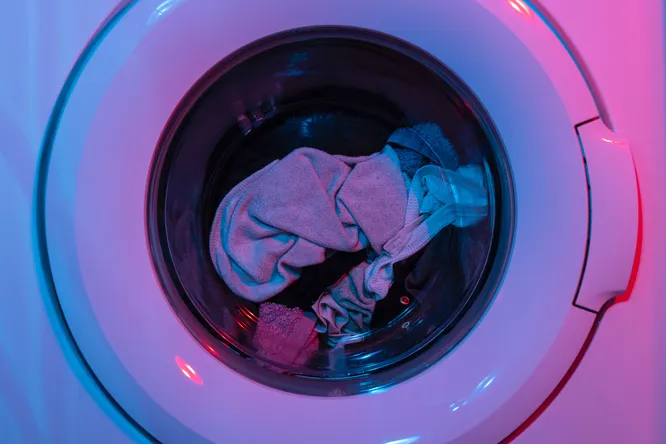
Musty odors will develop
This is caused by mold and bacteria, as a damp environment is the perfect breeding ground for them. As laundry and cleaning expert Johannes Bangao Godoy explains, you can’t get rid of the unpleasant odor by simply drying the garment – ​​you’ll need to wash it again with a cup of white vinegar in the rinse cycle or use a laundry disinfectant.

Pages: 1 2

Advertisement

When choosing new headphones, you probably pay attention to their design – how they look in your ears and whether they match your style. Most often, they are white or black, but there are also pale green, lilac, and blue, as well as models with stylish inserts – for example, with elements of silver strings. You can choose the right color and design for your style and favorite clothes.

Pages: 1 2

Advertisement

2022: 35% of large companies have started implementing AI (according to IBM).
2023: Investments in generative AI have grown 8-fold, reaching $25.2 billion (according to McKinsey).
2024: The neural network market in Russia has reached 35 billion rubles and continues to grow (according to ICT Moscow).
What will happen next?
2025: Companies will begin to actively reduce office staff through automation. But at the same time, businesses will need more specialists who can interact with AI.

2026–2027: A new layer of professions will finally form on the labor market: AI editors, digital assistant developers, AI ethics audiences, metauniverse designers.

By 2030: Artificial intelligence is expected to increase the global economy by $15.7 trillion (PwC).

Pages: 1 2

Advertisement

f you have previously enabled the “Find My Phone” option, you can unlock the device via iCloud. In addition, you need to know your Apple ID, and the phone must be connected to a mobile phone or Wi-Fi. If all conditions are met, and you forgot the screen lock password, here’s how to unlock your iPhone.

Pages: 1 2

Advertisement

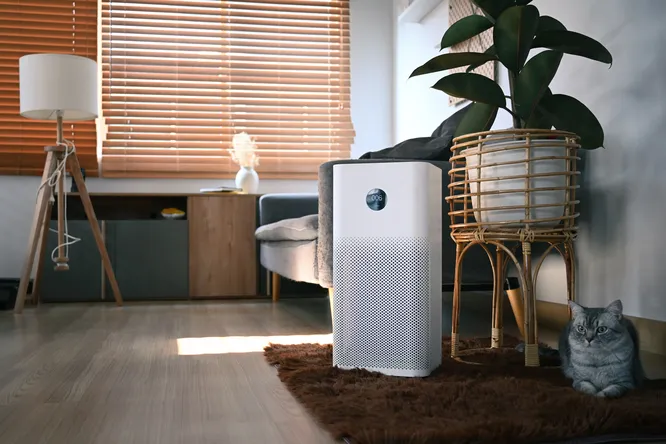
The principle of operation of the device is very simple: it draws in air, passes it through a filter system, and then returns it to the room already cleaned. The purifier is able to remove dust, pollen and other allergens, odors, tobacco smoke particles, viruses, bacteria, and, of course, animal hair from the room.

The gadget is a friend not only of an allergy sufferer, but also of a housewife: after it appears in the house, wet cleaning can be done much less often. The air purifier is especially relevant for people who keep cats, dogs and other “woolly” animals – it copes well with maintaining cleanliness in the apartment.

But if you want to get one to forget about the molting season, then you need to know a few important rules.

Pages: 1 2

Advertisement

“Time”

In Celtic mythology, children were always warned against meeting elves and traveling to their kingdom. Time in their beautiful green world, full of delights, flows so slowly that when a person decides to return home, he discovers that 50 or even 100 years have passed and everyone in his native village has long forgotten about him. Modern mythmaker Night Shyamalan in the film “In Time” offers an inverse version of the “elven utopia”: on a cozy sandy beach, time, on the contrary, flies at an incredible speed. And this is even more frightening than the prospect of returning to the future after drinking tea with the elves. But in general, no matter how you look at it, it is better to get into time traps only in the movies.

Pages: 1 2

Advertisement

The famous pendant was a bit of a fake: Asprey & Garrad did create it specifically for the film and used a real sapphire, but it was not framed with diamonds, but with much cheaper cubic zirconia. So the pendant cost “only” $10,000. But later, when the film was released and viewers began storming movie theaters and buying up T-shirts with the faces of their favorite characters, jewelers created exactly the same piece of jewelry, but this time with real diamonds. The jewelry with a 170-carat sapphire and 65 diamonds was sold at a charity auction for $2.2 million.

Pages: 1 2

Advertisement

“Harry Potter and the Philosopher’s Stone”, 2002

Ordinary British schoolchildren Daniel Radcliffe, Emma Watson and Rupert Grint woke up as real stars after the release of this film, because they played the main characters, embodying on the screen the images of three young wizards and best friends – the gifted orphan boy Harry Potter, the exemplary excellent student Hermione Granger and the simple-minded good-natured Ron Weasley. They all began their acting careers as children and grew up in front of viewers as new parts of the film franchise were released. After participating in the fantasy saga, all three continued to play in theater and cinema, but for many viewers Radcliffe, Watson and Grint will forever remain the same trio of friends from Gryffindor.

Pages: 1 2

Advertisement

Matthew McConaughey – “Dallas Buyers Club”

2012 was a turning point for the actor. McConaughey decided to be serious — both in his personal life and in his career. He married Brazilian model Camila Alves and instead of another romantic comedy, he chose the script for Dallas Buyers Club, a drama about AIDS.

This role was difficult for Matthew: he was spiritually and physically exhausted. For the role of an HIV-positive hero, McConaughey lost 12 kilograms, after which he began to have problems with his vision. Fortunately, the actor consulted doctors in time, but the consequences of extreme weight loss (nausea, dizziness, problems with blood pressure and digestion) tormented McConaughey for a year after filming.

Pages: 1 2

Advertisement

Newer Posts